Free Mindful Eating Diary Printable
Jan 27, 2026
Mindful Eating Diary – A Printable Tool for Conscious Eating
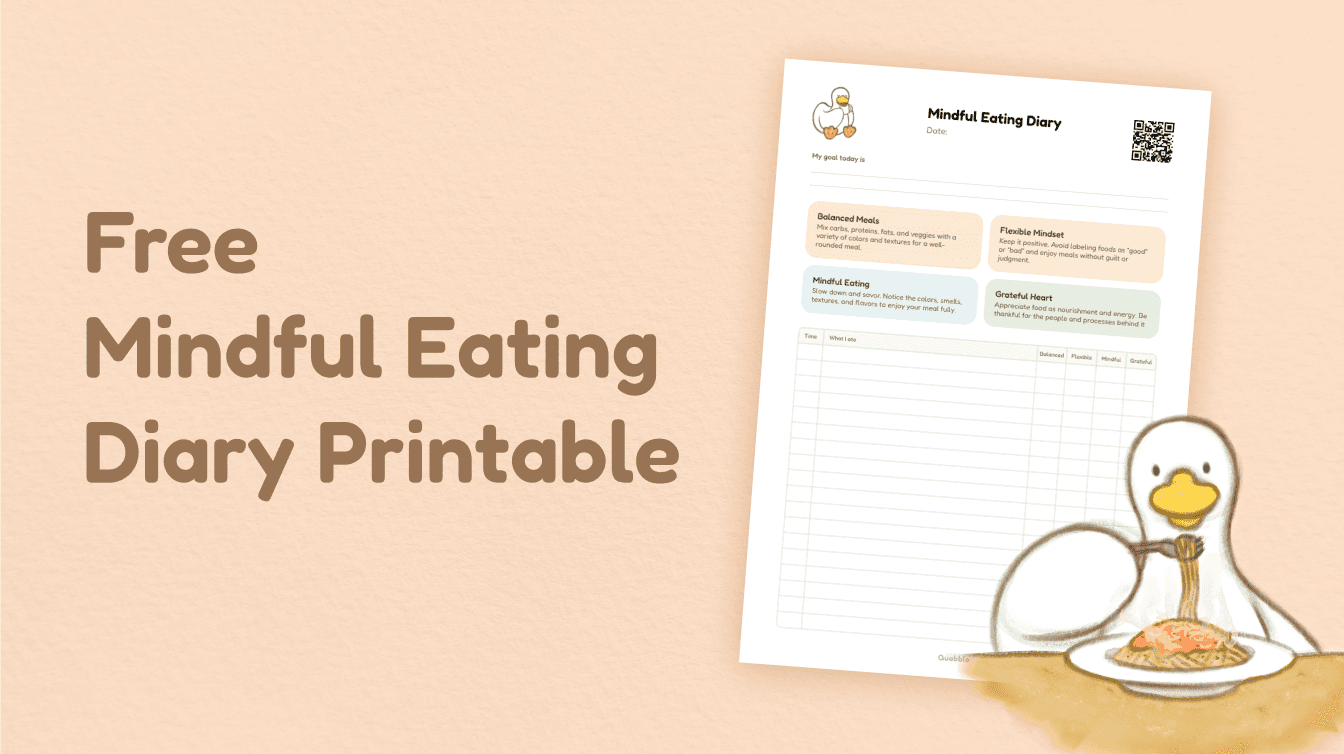
A mindful eating diary is a great tool to help clients shift the focus away from control-based eating, whether driven by external rules or internal pressure, toward understanding behavior, emotions, and physical hunger cues that shape eating habits. When clients record what, why, and how they eat, it becomes easier to see what’s really driving their choices, which helps therapy process and supporting clients in building healthier eating habits and routines.
In this post, you’ll find
The benefits of using an eating diary with clients
Common challenges clients may face when practicing food journaling
A free, printable mindful eating diary
How to incorporate this mindful eating diary into your therapy practice
Why we recommend this activity
More ways to support mindful eating
The Benefits of Using an Eating Diary with Clients
Tracking eating habits with a diary offers several benefits for both clients and mental health professionals.
For clients, using a mindful eating diary can help:
Increase awareness
Regularly completing a mindful eating diary helps clients turn food intake into a present-moment experience. Focusing on emotional, physical and environmental aspects of eating helps break automatic habits and better understand hunger, while building more mindful practices.Reduce guilt and build self-trust
By logging eating habits, clients can focus on reviewing their experience and understanding it from different angles, which helps reduce guilt and promotes a non-judgemental approach to eating. It also helps build self-trust by observing patterns over time, encouraging reliance on their body signals.Improve the mind-body connection
Reflecting on eating patterns and regularly documenting these reflections encourages clients to recognize hunger and satiety cues, and trust these internal signals over rigid food rules like “not eating after 6 pm” or “no carbs”. Focusing on taste and texture can help clients with restrictive behavior increase calorie intake or, in contrast, reduce impulsive eating.Having balanced meals
Keeping a mindful eating diary helps clients achieve balanced meals by shifting focus from restrictive patterns toward awareness and nutrient quality. The diary prompts clients to note the balance of carbs, fats, protein and fiber, promoting more balanced eating.
For therapists, incorporating food journal into practice can help:
Identify emotional and environmental triggers
Using food journals in therapy can help identify both internal triggers, like the link between anxiety or specific moods and disordered eating such as bingeing or restricting, and external triggers, such as social situations or day-to-day stressors that influence food choices and eating behavior.Develop personalized strategies
Mindful eating assessments, like diaries or journals, give a window into clients’ unique patterns, triggers, and habits. These insights help therapists build tailored interventions that truly fit their clients’ lifestyle, such as adjusting meal schedules to prevent late-night binges, which supports long-term change.Monitor progress
Consistently tracking entries gives an objective way to observe changes in behavior and see how applied strategies influence eating patterns over time. It also helps clients recognize their own growth, reinforcing the value of mindful eating.
Common Challenges Clients May Face When Practicing Food Journaling
Like other therapy approaches, mindful eating practice comes with a few challenges, especially when clients are just starting the new routine of keeping a mindful eating diary. The most common challenges are emotional, psychological, cognitive, and practical, which may require extra support and guidance early on.
Challenge of feeling guilt
Recording meals can trigger guilt and shame, particularly in clients with “black and white” thinking that can be triggered when they feel they haven’t met the diary’s goals. Encouraging these clients to focus on the process, without labeling it as good or bad, can help them overcome this challenge and make progress in mindful eating.Fear of being judged
Some clients, especially those with low self-esteem or self-conscious tendencies, may worry that therapists will judge their food choices, which can cause emotional discomfort and hinder diary submissions. Explaining that there are no right or wrong answers and framing therapy as a safe space can help clients feel comfortable sharing their experiences as they are.Difficulty logging complex meals
Tracking multi-ingredient, home-cooked, or take-out meals can feel challenging for some clients, particularly those prone to perfectionism, which may lead to feeling overwhelmed or frustrated. Encouraging these clients to submit raw entries, regardless of how complete or imperfect those are, will help them focus less on precision and more on reflecting on their experience.Time constraints
Some clients do well during sessions but struggle to keep up with assessments outside of therapy hours. Incorporating a mindful eating diary into a busy routine can be challenging, sometimes leading to skipped days, inconsistent entries, or rushed submissions. Positioning the diary as a low-time-commitment and helping clients integrate it into their daily routine can support consistency and steady progress.
Free Printable Mindful Eating Diary
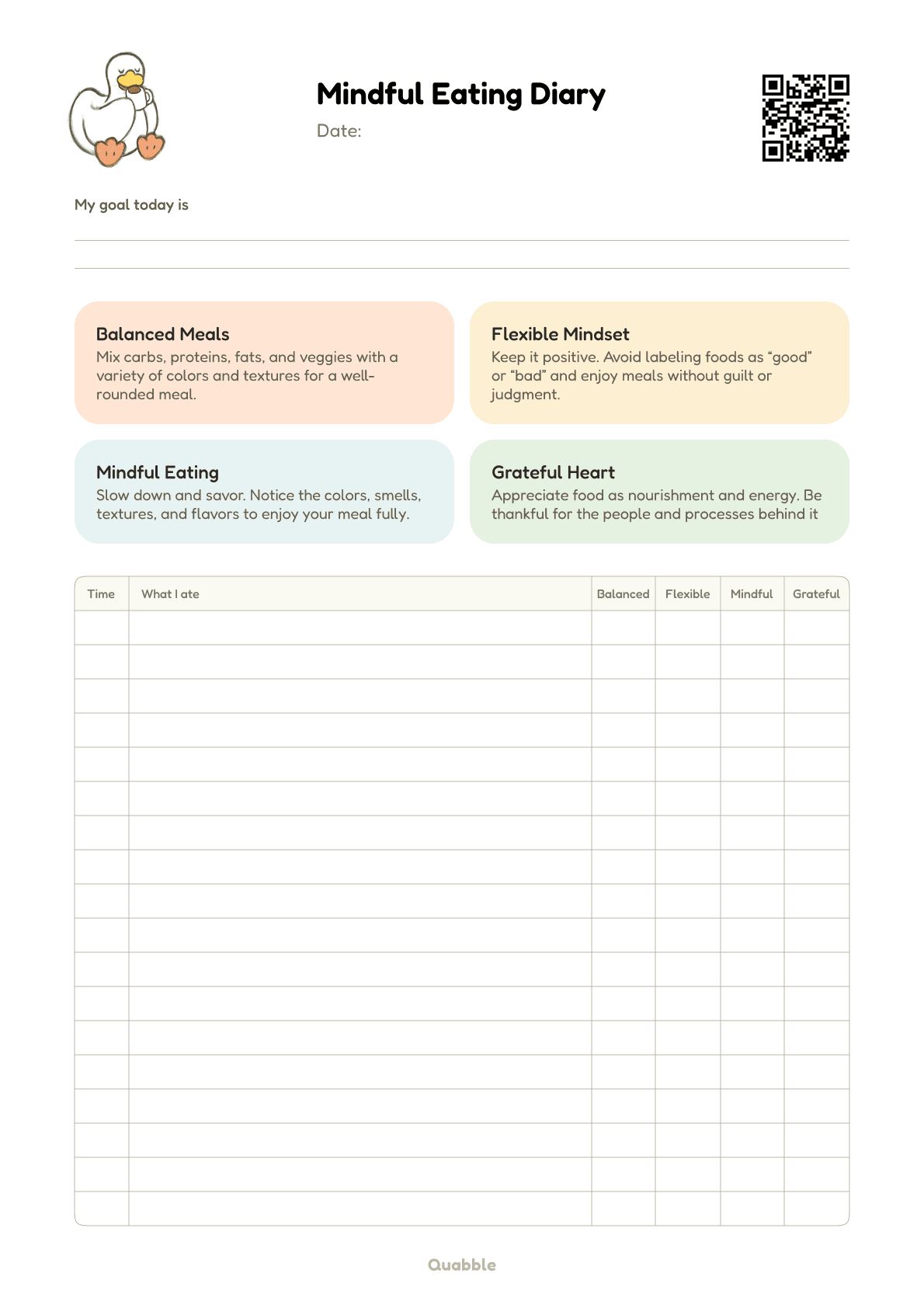
This printable mindful eating diary helps set weekly goals while encouraging clients to have balanced meals, enjoyment without guilt or judgement, gratitude, and slowing down for a more mindful eating experience. The activity encourages multiple daily entries, allowing clients to log each meal and reflect on four different criteria: balance, flexibility, mindfulness, and gratitude.
By logging meals daily and reflecting on them, clients can identify patterns, triggers, and areas for improvement, work closely with their therapist to address them, and build new, more sustainable eating habits that support overall mental health.
Mindful Eating Diary – A Printable Tool for Conscious Eating
A mindful eating diary is a great tool to help clients shift the focus away from control-based eating, whether driven by external rules or internal pressure, toward understanding behavior, emotions, and physical hunger cues that shape eating habits. When clients record what, why, and how they eat, it becomes easier to see what’s really driving their choices, which helps therapy process and supporting clients in building healthier eating habits and routines.
In this post, you’ll find
The benefits of using an eating diary with clients
Common challenges clients may face when practicing food journaling
A free, printable mindful eating diary
How to incorporate this mindful eating diary into your therapy practice
Why we recommend this activity
More ways to support mindful eating
The Benefits of Using an Eating Diary with Clients
Tracking eating habits with a diary offers several benefits for both clients and mental health professionals.
For clients, using a mindful eating diary can help:
Increase awareness
Regularly completing a mindful eating diary helps clients turn food intake into a present-moment experience. Focusing on emotional, physical and environmental aspects of eating helps break automatic habits and better understand hunger, while building more mindful practices.Reduce guilt and build self-trust
By logging eating habits, clients can focus on reviewing their experience and understanding it from different angles, which helps reduce guilt and promotes a non-judgemental approach to eating. It also helps build self-trust by observing patterns over time, encouraging reliance on their body signals.Improve the mind-body connection
Reflecting on eating patterns and regularly documenting these reflections encourages clients to recognize hunger and satiety cues, and trust these internal signals over rigid food rules like “not eating after 6 pm” or “no carbs”. Focusing on taste and texture can help clients with restrictive behavior increase calorie intake or, in contrast, reduce impulsive eating.Having balanced meals
Keeping a mindful eating diary helps clients achieve balanced meals by shifting focus from restrictive patterns toward awareness and nutrient quality. The diary prompts clients to note the balance of carbs, fats, protein and fiber, promoting more balanced eating.
For therapists, incorporating food journal into practice can help:
Identify emotional and environmental triggers
Using food journals in therapy can help identify both internal triggers, like the link between anxiety or specific moods and disordered eating such as bingeing or restricting, and external triggers, such as social situations or day-to-day stressors that influence food choices and eating behavior.Develop personalized strategies
Mindful eating assessments, like diaries or journals, give a window into clients’ unique patterns, triggers, and habits. These insights help therapists build tailored interventions that truly fit their clients’ lifestyle, such as adjusting meal schedules to prevent late-night binges, which supports long-term change.Monitor progress
Consistently tracking entries gives an objective way to observe changes in behavior and see how applied strategies influence eating patterns over time. It also helps clients recognize their own growth, reinforcing the value of mindful eating.
Common Challenges Clients May Face When Practicing Food Journaling
Like other therapy approaches, mindful eating practice comes with a few challenges, especially when clients are just starting the new routine of keeping a mindful eating diary. The most common challenges are emotional, psychological, cognitive, and practical, which may require extra support and guidance early on.
Challenge of feeling guilt
Recording meals can trigger guilt and shame, particularly in clients with “black and white” thinking that can be triggered when they feel they haven’t met the diary’s goals. Encouraging these clients to focus on the process, without labeling it as good or bad, can help them overcome this challenge and make progress in mindful eating.Fear of being judged
Some clients, especially those with low self-esteem or self-conscious tendencies, may worry that therapists will judge their food choices, which can cause emotional discomfort and hinder diary submissions. Explaining that there are no right or wrong answers and framing therapy as a safe space can help clients feel comfortable sharing their experiences as they are.Difficulty logging complex meals
Tracking multi-ingredient, home-cooked, or take-out meals can feel challenging for some clients, particularly those prone to perfectionism, which may lead to feeling overwhelmed or frustrated. Encouraging these clients to submit raw entries, regardless of how complete or imperfect those are, will help them focus less on precision and more on reflecting on their experience.Time constraints
Some clients do well during sessions but struggle to keep up with assessments outside of therapy hours. Incorporating a mindful eating diary into a busy routine can be challenging, sometimes leading to skipped days, inconsistent entries, or rushed submissions. Positioning the diary as a low-time-commitment and helping clients integrate it into their daily routine can support consistency and steady progress.
Free Printable Mindful Eating Diary
This printable mindful eating diary helps set weekly goals while encouraging clients to have balanced meals, enjoyment without guilt or judgement, gratitude, and slowing down for a more mindful eating experience. The activity encourages multiple daily entries, allowing clients to log each meal and reflect on four different criteria: balance, flexibility, mindfulness, and gratitude.
By logging meals daily and reflecting on them, clients can identify patterns, triggers, and areas for improvement, work closely with their therapist to address them, and build new, more sustainable eating habits that support overall mental health.
Download the Activity
How to Incorporate This Mindful Eating Diary into Your Therapy Practice
You can use this mindful eating diary as a tool for emotional awareness, self-compassion, and behavioral change in your 1:1 therapy practice by following these steps:
Share the activity and the steps that need to be done
Walk clients through the activity and its benefits. Explain how to set goals, evaluate meals according to the diary criteria, and discuss submission frequency. If needed, start small with one entry a day and gradually increase the number of submissions to build the habit without overwhelm.Set time during sessions to review the submissions
Review and discuss the entries together during sessions. Address challenges, patterns, and automatic behaviors you notice, and foster awareness. Incorporating diary review into weekly sessions helps clients stay consistent while reinforcing awareness “by example.”Build tailored strategies
Based on the submissions, create customized strategies and interventions that address your client’s eating patterns. Include actionable mindful techniques, such as the pause technique or a halfway check-in, to keep the process grounded in the present moment and encourage active reflection.
Why We Recommend This Activity
We recommend this journal to therapists who help clients foster better relationships with food, and address the patterns commonly linked to emotional eating, external eating, binge eating, mindless snacking, anxiety, stress, and depression. By providing a structured plan with reflection criteria, clients can identify triggers, see the connection between moods and eating, and use it as a grounding exercise for stress and anxiety triggered by food.
More Ways to Support Mindful Eating
A printable mindful eating diary like this one is a great option for clients who prefer paper-based assessments or a PDF they can work with on a computer. For clients who want hands-on access and the ability to make multiple entries throughout the day, we recommend a more flexible and accessible format. That’s why we created Quabble, an app with 20+ activities to support mental health, including this mindful eating diary in a digital format.
The digital version helps clients build a healthier, more positive connection with food by being accessible on their phone, providing daily reminders, making it easier to log meals throughout the day, and giving access to other activities that complement their mental health journey.
Try Quabble for free and see how a digital assessment like this food journal can support your clients' mental health.
How to Incorporate This Mindful Eating Diary into Your Therapy Practice
You can use this mindful eating diary as a tool for emotional awareness, self-compassion, and behavioral change in your 1:1 therapy practice by following these steps:
Share the activity and the steps that need to be done
Walk clients through the activity and its benefits. Explain how to set goals, evaluate meals according to the diary criteria, and discuss submission frequency. If needed, start small with one entry a day and gradually increase the number of submissions to build the habit without overwhelm.Set time during sessions to review the submissions
Review and discuss the entries together during sessions. Address challenges, patterns, and automatic behaviors you notice, and foster awareness. Incorporating diary review into weekly sessions helps clients stay consistent while reinforcing awareness “by example.”Build tailored strategies
Based on the submissions, create customized strategies and interventions that address your client’s eating patterns. Include actionable mindful techniques, such as the pause technique or a halfway check-in, to keep the process grounded in the present moment and encourage active reflection.
Why We Recommend This Activity
We recommend this journal to therapists who help clients foster better relationships with food, and address the patterns commonly linked to emotional eating, external eating, binge eating, mindless snacking, anxiety, stress, and depression. By providing a structured plan with reflection criteria, clients can identify triggers, see the connection between moods and eating, and use it as a grounding exercise for stress and anxiety triggered by food.
More Ways to Support Mindful Eating
A printable mindful eating diary like this one is a great option for clients who prefer paper-based assessments or a PDF they can work with on a computer. For clients who want hands-on access and the ability to make multiple entries throughout the day, we recommend a more flexible and accessible format. That’s why we created Quabble, an app with 20+ activities to support mental health, including this mindful eating diary in a digital format.
The digital version helps clients build a healthier, more positive connection with food by being accessible on their phone, providing daily reminders, making it easier to log meals throughout the day, and giving access to other activities that complement their mental health journey.
Try Quabble for free and see how a digital assessment like this food journal can support your clients' mental health.
© 2025 museLIVE Inc.
© 2025 museLIVE Inc.