Free Mood Tracker Printable
Jan 12, 2026
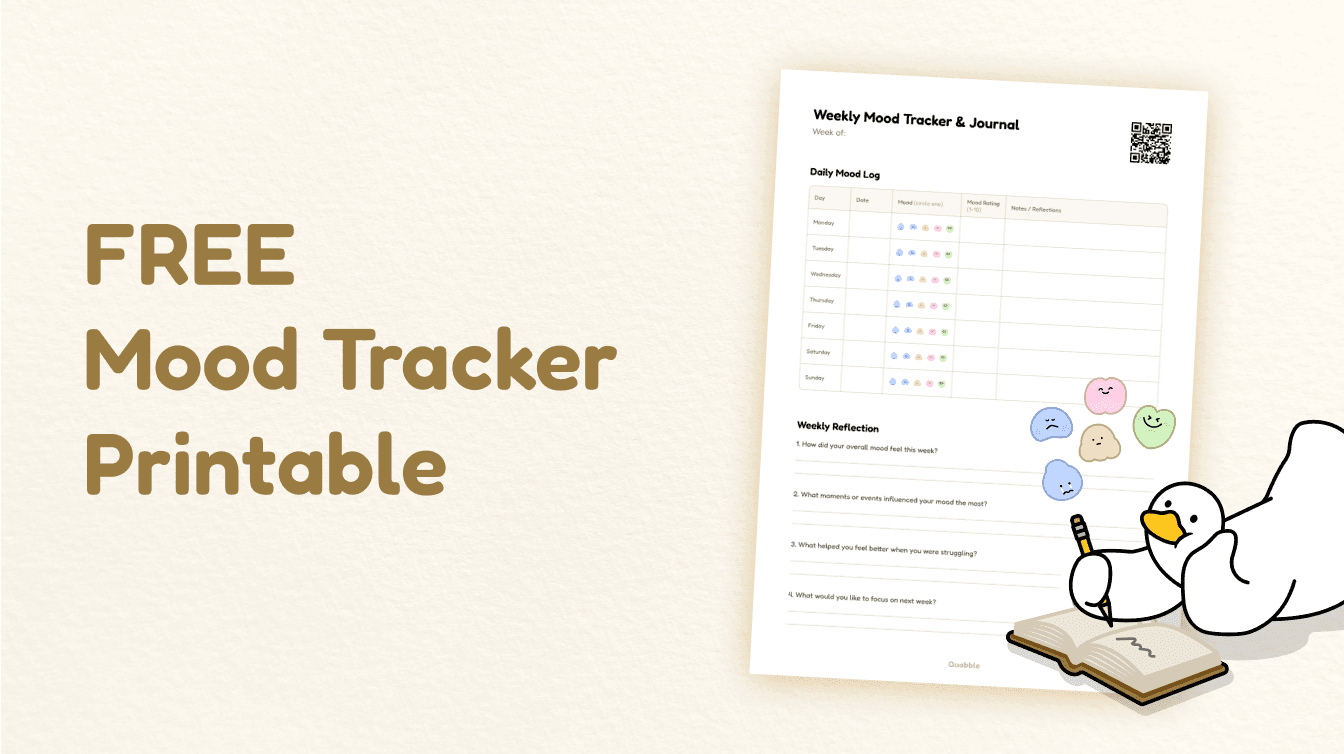
Free Printable Mood Tracker: A Self-Assessment Tool for Mood Monitoring
Mood trackers help therapy clients build emotional awareness while providing mental health professionals with insights into triggers, patterns and coping strategies. When used in therapy, a mood tracker helps make evidence-based conclusions that inform more personalized treatment planning, while making tracking progress easier over time. It also encourages clients to take an active role in improving their mental health by understanding and managing their moods.
In this post, you’ll find
Benefits of using mood trackers
Common challenges in mood tracking
A free printable mood tracker
How to incorporate this mood tracker into your therapy practice
Why we recommend this mood tracker
More ways to monitor mood
Benefits of Using Mood Trackers
Mood trackers offer several benefits for the therapy process, both for clients and mental health professionals.
For clients, mood monitoring can help:
Improve self-awareness and emotional regulation
Mood trackers help clients recognize, name, and understand their emotions. With regular assessments, this builds emotional regulation skills, which leads to more intentional responses rather than impulsive reactions.Identify patterns and triggers
By regularly logging moods and reflecting on situations that caused them, whether its quality of sleep, diet, social interactions, or life transitions, clients can notice triggers and patterns that affect their emotional well-being.Participate more actively in therapy
Mood tracking gives clients a sense of ownership in managing their mental health. It also makes their therapy progress more visible, which can lead to increased engagement during sessions as well as support better outcomes.Improve motivation
Being able to see changes in patterns over time and having a more visible therapy progress often leads to improved motivation, especially during challenging periods, when progress otherwise feels slow or stalled.
For mental health professionals mood monitoring ensures:
Data-informed diagnosis and tailored strategies
Mood tracking provides access to a log of regular observations, which helps mental health professionals to make more data-informed decisions and come up with strategies that fit each client’s specific case. Over time, this creates a fuller picture of client’s experiences and the challenges they face.
Better client–therapist communication
Mood trackers provide a ground for therapeutic discussions and lead to more focused sessions. The information gathered through mood self-assessments allows mental health professionals to provide regular feedback, grounded in the client’s lived experience, and support progress.Flagging early signs of relapse
Tracking shifts in mood over time can help mental health professionals spot warning signs such as prolonged low mood or recurring patterns that may increase anxiety or contribute to the development of depression. This makes it easier to intervene before the symptoms escalate.Support outside of therapy hours
Many clients engage well during sessions but struggle to maintain the same momentum between calls and appointments. Integrating a mood tracker into between-session work gives clients structure and offers guidance beyond the therapy sessions.
Common Challenges in Mood Tracking
While most mood trackers are designed as simple activities, they still come with challenges. The most common one is consistency. Even when clients engage well in therapy sessions, completing activities outside of therapy hours can be difficult due to limited time or low motivation. This often leads to inconsistent tracking, which can slow down progress or reduce the effectiveness of the therapy overall.
Another common challenge is difficulty identifying and accurately labeling emotions. As a result, clients struggle to articulate how they feel, and the task can quickly become overwhelming. Overthinking emotions and searching for the right word can make mood tracking feel more mentally demanding than expected, leading to delays and lack of consistency.
Some clients may also struggle with self-reflection and honestly labeling their feelings due to self‑criticism. Research has shown that people who are high in self‑criticism tend to experience more anxiety and negative self‑evaluation, which can make honest self‑assessment feel threatening or uncomfortable. As a result, the process of rating moods or acknowledging “bad days” can become more than just tracking data and lead to judgment of personal performance or worth.
Free Printable Mood Tracker – A Self-assessment for Mood Monitoring
Free Printable Mood Tracker: A Self-Assessment Tool for Mood Monitoring
Mood trackers help therapy clients build emotional awareness while providing mental health professionals with insights into triggers, patterns and coping strategies. When used in therapy, a mood tracker helps make evidence-based conclusions that inform more personalized treatment planning, while making tracking progress easier over time. It also encourages clients to take an active role in improving their mental health by understanding and managing their moods.
In this post, you’ll find
Benefits of using mood trackers
Common challenges in mood tracking
A free printable mood tracker
How to incorporate this mood tracker into your therapy practice
Why we recommend this mood tracker
More ways to monitor mood
Benefits of Using Mood Trackers
Mood trackers offer several benefits for the therapy process, both for clients and mental health professionals.
For clients, mood monitoring can help:
Improve self-awareness and emotional regulation
Mood trackers help clients recognize, name, and understand their emotions. With regular assessments, this builds emotional regulation skills, which leads to more intentional responses rather than impulsive reactions.Identify patterns and triggers
By regularly logging moods and reflecting on situations that caused them, whether its quality of sleep, diet, social interactions, or life transitions, clients can notice triggers and patterns that affect their emotional well-being.Participate more actively in therapy
Mood tracking gives clients a sense of ownership in managing their mental health. It also makes their therapy progress more visible, which can lead to increased engagement during sessions as well as support better outcomes.Improve motivation
Being able to see changes in patterns over time and having a more visible therapy progress often leads to improved motivation, especially during challenging periods, when progress otherwise feels slow or stalled.
For mental health professionals mood monitoring ensures:
Data-informed diagnosis and tailored strategies
Mood tracking provides access to a log of regular observations, which helps mental health professionals to make more data-informed decisions and come up with strategies that fit each client’s specific case. Over time, this creates a fuller picture of client’s experiences and the challenges they face.
Better client–therapist communication
Mood trackers provide a ground for therapeutic discussions and lead to more focused sessions. The information gathered through mood self-assessments allows mental health professionals to provide regular feedback, grounded in the client’s lived experience, and support progress.Flagging early signs of relapse
Tracking shifts in mood over time can help mental health professionals spot warning signs such as prolonged low mood or recurring patterns that may increase anxiety or contribute to the development of depression. This makes it easier to intervene before the symptoms escalate.Support outside of therapy hours
Many clients engage well during sessions but struggle to maintain the same momentum between calls and appointments. Integrating a mood tracker into between-session work gives clients structure and offers guidance beyond the therapy sessions.
Common Challenges in Mood Tracking
While most mood trackers are designed as simple activities, they still come with challenges. The most common one is consistency. Even when clients engage well in therapy sessions, completing activities outside of therapy hours can be difficult due to limited time or low motivation. This often leads to inconsistent tracking, which can slow down progress or reduce the effectiveness of the therapy overall.
Another common challenge is difficulty identifying and accurately labeling emotions. As a result, clients struggle to articulate how they feel, and the task can quickly become overwhelming. Overthinking emotions and searching for the right word can make mood tracking feel more mentally demanding than expected, leading to delays and lack of consistency.
Some clients may also struggle with self-reflection and honestly labeling their feelings due to self‑criticism. Research has shown that people who are high in self‑criticism tend to experience more anxiety and negative self‑evaluation, which can make honest self‑assessment feel threatening or uncomfortable. As a result, the process of rating moods or acknowledging “bad days” can become more than just tracking data and lead to judgment of personal performance or worth.
Free Printable Mood Tracker – A Self-assessment for Mood Monitoring
Download the Activity
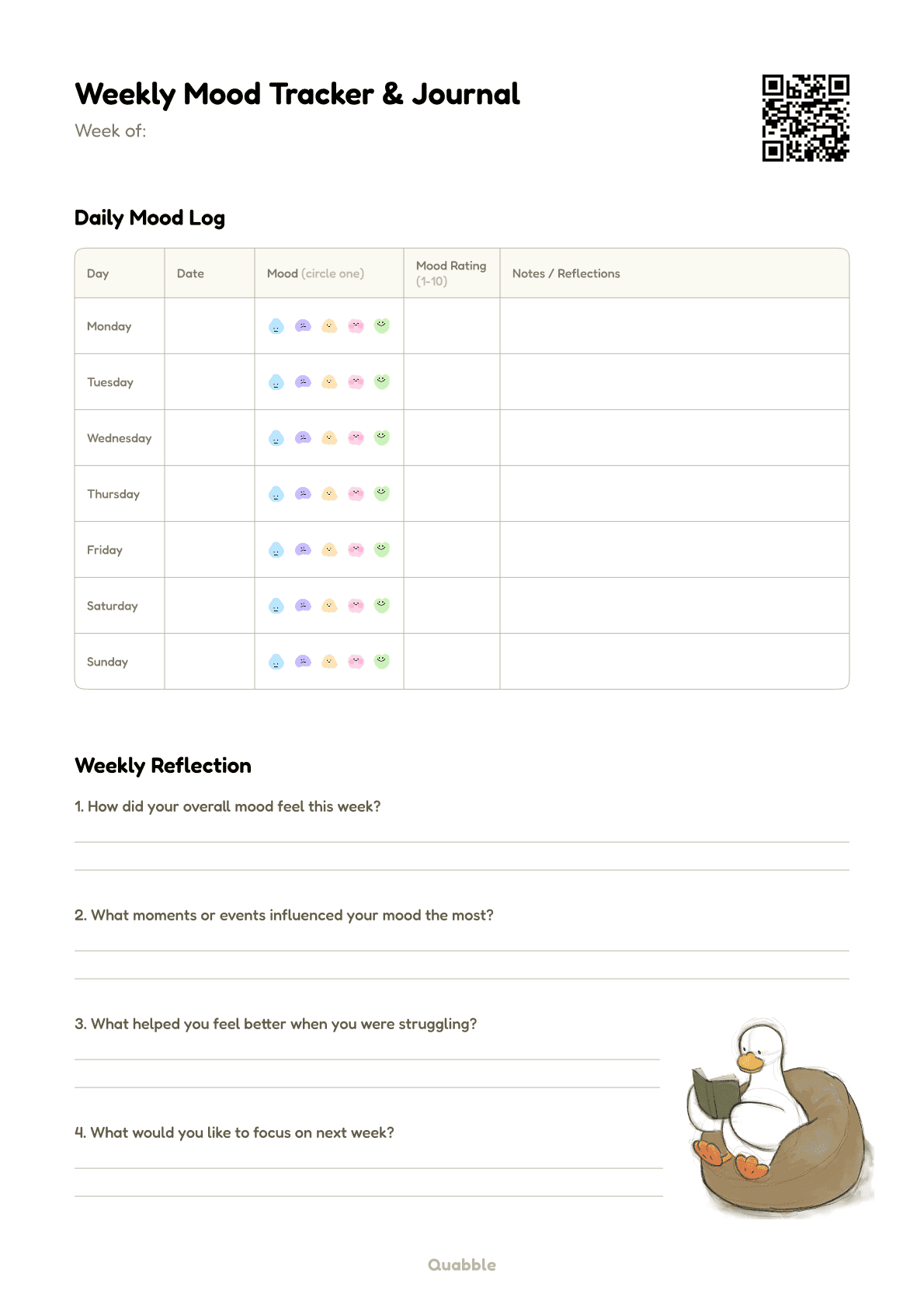
This worksheet is a printable mood tracker and journal that allows clients to monitor their mood on a weekly basis. Each day includes the option to highlight their state of mind, rate it, and leave brief notes for reflection. Clients are also prompted to answer four questions and evaluate their overall week: what influenced their moods, what helped them feel better, and what goals they want to set for the following week. This structure encourages clients to reflect on their experiences, maintain a meaningful mood log, and support progress in therapy.
How to Incorporate This Mood Assessment in Your Practice
Introduce the mood tracker
Walk your clients through the benefits of mood tracking, how it can help identify patterns, uncover triggers, and track progress over time.Present it as a collaborative tool
Explain that this tracker is a “no right or wrong” activity and set realistic expectations for time and effort required, so clients don’t see it as a test or a time-consuming work.Walk clients through the process
Show them how to fill out the fields, and emphasize the importance of regular entries. This helps clients build a routine and incorporate the tracker into their daily schedule.Review results together
Go over the entries weekly during therapy sessions or during mid-session check-ins. Use this review to highlight patterns, celebrate progress, and address challenges.Reinforce ongoing practice
Encourage regular entries over time to provide a fuller picture of mood patterns, guide interventions when needed, and support clients in recognizing and reframing negative thought patterns.
Why We Recommend This Mood Tracker
We recommend this printable mood tracker for clients who prefer paper-based activities. It provides a structured routine that will help them recognize patterns and identify triggers, supporting their mental health journey on a day-to-day basis.
More Ways to Monitor Mood
While printable activities like this mood tracker above are great for clients who prefer working with printables or PDFs, there are other ways to track mood that can be easier to implement into a busy daily schedule. For this reason, we created Quabble, where you can find over 20 activities to support your clients’ mental health, including this mood tracker in a digital format. A digital mood tracker helps clients stay consistent with the help of reminders, have an all time access to the tracker from their phones, and explore additional ways to apply insights from therapy sessions. Try Quabble for free and explore how digital activities like this one can complement and support your clients’ mental health work.
This worksheet is a printable mood tracker and journal that allows clients to monitor their mood on a weekly basis. Each day includes the option to highlight their state of mind, rate it, and leave brief notes for reflection. Clients are also prompted to answer four questions and evaluate their overall week: what influenced their moods, what helped them feel better, and what goals they want to set for the following week. This structure encourages clients to reflect on their experiences, maintain a meaningful mood log, and support progress in therapy.
How to Incorporate This Mood Assessment in Your Practice
Introduce the mood tracker
Walk your clients through the benefits of mood tracking, how it can help identify patterns, uncover triggers, and track progress over time.Present it as a collaborative tool
Explain that this tracker is a “no right or wrong” activity and set realistic expectations for time and effort required, so clients don’t see it as a test or a time-consuming work.Walk clients through the process
Show them how to fill out the fields, and emphasize the importance of regular entries. This helps clients build a routine and incorporate the tracker into their daily schedule.Review results together
Go over the entries weekly during therapy sessions or during mid-session check-ins. Use this review to highlight patterns, celebrate progress, and address challenges.Reinforce ongoing practice
Encourage regular entries over time to provide a fuller picture of mood patterns, guide interventions when needed, and support clients in recognizing and reframing negative thought patterns.
Why We Recommend This Mood Tracker
We recommend this printable mood tracker for clients who prefer paper-based activities. It provides a structured routine that will help them recognize patterns and identify triggers, supporting their mental health journey on a day-to-day basis.
More Ways to Monitor Mood
While printable activities like this mood tracker above are great for clients who prefer working with printables or PDFs, there are other ways to track mood that can be easier to implement into a busy daily schedule. For this reason, we created Quabble, where you can find over 20 activities to support your clients’ mental health, including this mood tracker in a digital format. A digital mood tracker helps clients stay consistent with the help of reminders, have an all time access to the tracker from their phones, and explore additional ways to apply insights from therapy sessions. Try Quabble for free and explore how digital activities like this one can complement and support your clients’ mental health work.
© 2025 museLIVE Inc.
© 2025 museLIVE Inc.